March 21, 2026tips
The Science Behind Sourdough Fermentation
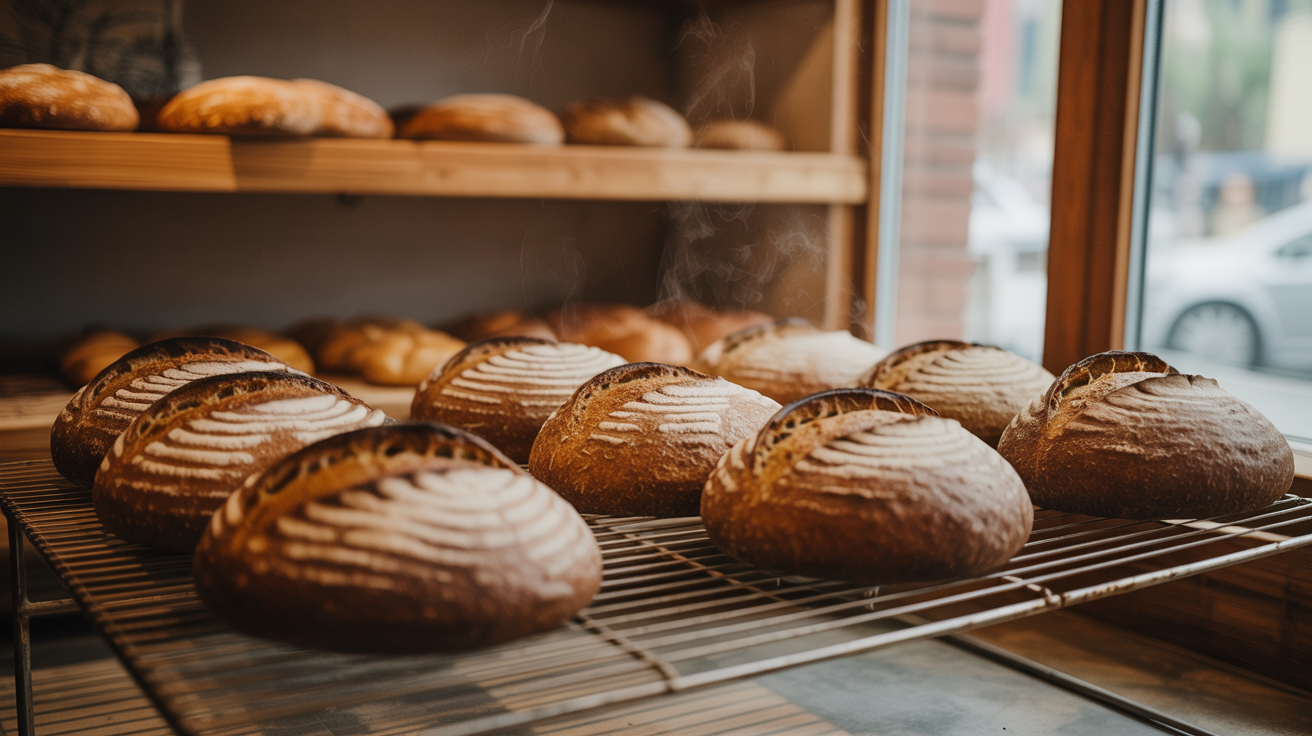
Sourdough fermentation is a fascinating process that involves wild yeast and lactic acid bacteria working together to leaven bread naturally.
During our 48-hour process, the starter breaks down the flour's starches into simpler sugars, which the yeast then converts into carbon dioxide and alcohol. Meanwhile, the bacteria produce lactic and acetic acids, creating that distinctive tangy flavor.
This slow fermentation also breaks down phytic acid, making the bread easier to digest and allowing better absorption of minerals like iron, zinc, and magnesium.
The result? Bread with complex flavors, better nutrition, and a texture that simply can't be replicated with commercial yeast.
During our 48-hour process, the starter breaks down the flour's starches into simpler sugars, which the yeast then converts into carbon dioxide and alcohol. Meanwhile, the bacteria produce lactic and acetic acids, creating that distinctive tangy flavor.
This slow fermentation also breaks down phytic acid, making the bread easier to digest and allowing better absorption of minerals like iron, zinc, and magnesium.
The result? Bread with complex flavors, better nutrition, and a texture that simply can't be replicated with commercial yeast.